Programmatic advertising in a post ATT world

Back in the summer of 2021, performance marketing changed irreversibly when Apple released an update its consent mechanism for sharing device ids. A lot has been written about how the impact of ATT (App Tracking Transparency) on advertising and most recently a part of the reason Meta/Facebook’s stock tanked so much was due to a loss of revenue from iOS (in addition to decline is usage).

What is ATT

In short, ATT means that advertisers need to have a user’s consent before they can target them with advertising since iOS14.5 (released sometime middle of 2021 and then ramping up in adoption since then). In the case where consent is not explicitly granted, a user’s device id, a unique identifier on mobile that powers things like suppression lists, audience targeting, the algorithms of most DSPs among other things, cannot be used.
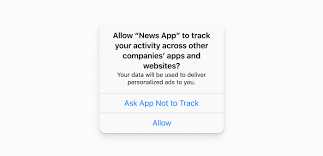
Earning User Tracking Permission for Apple's App Tracking Transparency (ATT)  Prompt

Singular has a nice piece on it here.

The impact of that change has been most spoken about so far in two ways; first its impact on Meta (mostly because Meta was so good at leveraging this unique identifier in conjunction with Meta’s own user data to power their advertising engine – this is also the reason why SNAP for example hasn’t seen the same impact – their algos were just not as good yet) and second how Apple’s own ad offering, chiefly Apple Search Ads, is now growing quickly.

What about ATT’s impact on programmatic

I’d like to focus on the impact of ATT on programmatic advertising though. Since ATT is iOS specific, this impact is felt most on mobile app advertising on iOS. I would say that in terms of efficiency mobile app advertising on programmatic has taken a much more significant hit than it has on Meta and I think the reasons this has not been covered more extensively are:

  • There are not many public programmatic advertising companies that are focused on mobile app advertising and therefore the impact of this is not reported publicly as has been the case with FB. Companies like The Trade Desk (which has been the poster child of independent programmatic buying) focus on other formats and could actually benefit from worse measurement on iOS, since that means that the pool of traffic that can be optimized at a user level is smaller so advertisers will be tempted to move up the funnel to other formats like DOOH and TV to deploy their budget and this is where TTD plays.
  • The mobile app focused programmatic companies that do exist have started using fingerprinting (or some variation of that term), which includes analyzing signals like IP address and device info, to get around the loss of data. Fingerprinting though is notoriously inaccurate and it’s impossible to run clear incrementality tests with it AND apple forbids it (but hasn’t enforced that policy).
  • The mobile app download space has often gotten less attention in general in the broader advertising space. You don’t win awards by running a successful mobile app advertising campaign (although you can actually make money for the place you work this way instead of just spending it!). This is also the same reason we had 10 years of the mobile at some point in the 00s and start of the last decade.

The impact on programmatic iOS mobile app campaigns has been devastating. Much worse than on FB. In the case of Meta, even though they lost a very important signal, Meta still has 1st party data that it can deploy for optimization and it has enough clout to convince advertisers that the measurement solutions it is building hold water. In the programmatic space, platforms have lost the ONLY signal (the device ID) they had to do mobile attribution on iOS for ~80% of their traffic. This means that for 80% of the traffic, programmatic platforms can no longer suppress existing users, can no longer build audience lists, can no longer have a common signal to match with advertisers (there are solutions being tested but none yet has proven to be a sustainable alternative).

Companies often have user acquisition budget and user re-engagement budget, but with this situation programmatic vendors can not even build separate re-engagement and acquisition campaigns anymore. And the remaining 20% of users that opt in, well they got really expensive.

Add to this the lack of incrementality testing, which used to work by splitting users into groups using their device IDs, and the picture is bleak.

What’s next

This is where I pick up my crystal ball and potentially make a fool out of myself. I’ll answer this question in two ways – what’s next for advertisers and what’s next for programmatic.

I’ll start with what a performance focused advertiser should do and I’ll state the obvious – the users that have iphones are still out there. Their device IDs mostly disappeared but the users mostly didn’t. The other obvious thing is that the majority of high LTV users on mobile are still on iOS. Advertisers will think need to target those users and it seems the easiest way to do that now, in-spite of all the challenges those vendors have, is still the same way it was before: iOS app campaigns on Google, Meta, TikTok and Apple etc. You might be tempted to instead put all your money into android, which would be easier to measure, but that means excluding what could be your most valuable users. Even with the reduced signals on iOS, buying ads on the OS where your app is published is still the best way forward. Here are a few ways to work around the reduced data quality though:

  • Combine re-engagement and acquisition budgets; you can’t do suppression well, so embrace it and find the unit economics that make sense across both acquisition and re-engagement.
  • Take pre-ATT as a baseline; you might be able to use that data to understand how inventory on iOS should perform. That historical data, if you have it, is really important to make estimations now.
  • If something was a bad idea a year ago, it is probably still a bad idea. IE don’t let the snake oil salespeople convince you that there’s a magical solution to bring back the data that was lost or replace it with another dataset. That dataset does not exist yet. If there was someone out there with as much data as Apple on iOS I’d like to think we would have noticed before ATT (unless the NSA are starting to monetize).
  • The mental model of the funnel still makes sense, in that the channels with the easiest path to conversion are probably where you’ll have the easiest time acquiring new users (such as iOS app channel). Like I mentioned before, even though measurement is harder now iOS it’s still easier than measuring the impact of top of the funnel channels like TV. That’s not to say there’s not opportunity to test TOF – however that decision should not be driven by the iOS measurement limitations.

Next I’ll answer this question as what’s next for programmatic.

I genuinely think exchange transacted programmatic for performance marketing is going to wither away. I realize this is a big claim for someone who has programmatic in their job title (and this is a good moment to call out that all views are my own in this article and not necessarily that of my employer’s). However, Apple is giving us a preview of how things will shake out when cookies go away and when Android starts down the line that iOS has scouted. The premise of performance marketing is that you can tie back your spend to business impact and I do not see a way yet where the fragmented programmatic space (IE individual publishers selling inventory on exchanges) will be able to do this at scale. Instead the trend is clear – consolidation into quasi ad networks that get measured separately and report back their own metrics.

The advertiser will sit in the middle consolidating those different signals and finding a way to make them comparable. In a space like this, advertisers will focus where the scale is in terms of userbase and use a measurement layer on top of vendors to compare performance. It’s not as clean as looking into the MMP and knowing what’s up but those days are behind us.

Programmatic buying will continue to evolve down the path of being a great tool for buying inventory at scale (and that buying will be focused on brand campaigns) but less so a way to buy audiences at scale – that honor will go to the new ad networks.

How to measure the success of a programmatic campaign

Programmatic display spend is on the increase, estimated to be $60 billion in 2019. With so much spend on the table, I believe it’s important to make sure the basics of campaign measurement are available to advertisers.

For the purpose of this article I will focus on display (and to some extent in-stream video) – they are arguably the most scaled programmatic channels. I’ll likely visit other programmatic channels (audio, DOOH) in another post.

Reporting metrics vs Measuring success

In an industry that’s obsessed with metrics, the last few years have generated many different metrics that marketers can observe at in programmatic. Clicks, impressions, reach, CTR, viewability, average frequency, site visits, unique visitors, completion rate, audibility, post click conversions, post view conversions, quality impression, human impression, human measurable and viewable impression that has 50% of the creative which is on screen for 2 seconds or more. And this is far from an exhaustive list.

We have all the metrics that we could ever ask for and more – and yet we still cannot consistently measure the success of campaigns.

The purchase funnel and knowing what a successful campaign looks like

Before we get into the weeds, let’s take a macro view at things. Let’s look at the business need – at why you are running a media campaign to start with.

You’re probably buying media to target one (or more) of the stages of the purchase funnel. Marketers want to drive some action that will eventually generate a purchase of a product and/or service.

Image result for awareness consideration conversion

Let’s keep that information front and centre as we look to measure our programmatic display media campaign.

This is important because many programmatic campaigns are planned with metrics in mind – a media planner will say we need to drive site visits, get video views or generate reach.

What they’re really saying (or should be saying) is I want to increase awareness of my product or I want to increase the consideration of my service.

This may sound like arguing semantics but it’s important because programmatic campaigns, like any media campaign, should have some sort of ROI: You are investing in media and hoping to move some business metrics. Media metrics are just a proxy to the business goals you want to achieve.

So the first part of measurement is identifying what your goal is and what the media KPI that is linked to that goal is.

Here are a few media KPIs that one may use per stage of the funnel:

Awareness KPIs: Reach, number of viewable impressions, completed video views

Consideration KPIs: page views, time on site, CTR (click through rate)

Conversion KPIs: cost per sale, cost per sign up

Tools to help you measure

With the above in mind, it becomes a bit easier to measure the success of your programmatic campaign. The next step is to select which tools to use for measurement. I’ve compiled a non-exhaustive list of tools. If you think there are other tools that do a good job of measuring feel free to drop them in the comments along with why and how you use them.

In-DSP reporting

The reporting suite of demand side platforms has come a long way. A significant number of media metrics that you may want to look at, such clicks, impressions, CTR, video views, completion rate will be directly available within your DSP’s reporting tool. Some DSPs (like Google DV360) offer even more in-depth verification metrics like viewability. DSPs can also offer a pixel solution to track conversions.

Adserver (Google campaign manager, Sizmek)

Ad servers allow you to measure across DSPs and across different publishers even if you are not buying programmatically. For metrics like unique reach, adservers can be invaluable. Adservers can also be useful for cross channel attribution (although walled gardens and privacy regulations are making this type of attribution more and more difficult). They are in some cases being made redundant by the capabilities of DSPs but they are far from obsolete.

Verification vendors (Moat, Doubleverify)

These tools can really help you measure you media quality. Not all impressions are equal – verification vendors can help you quantify the difference. In some cases you can build you own media metrics in those tools – for example “video view that is both viewable and audible” can be such a metric. This is useful for more advanced advertisers that want to ensure their media buys are of good quality.

Site analytics (Google Analytics)

When a user clicks through your programmatic ad, you can also track their behavior on the landing page. How much time did they spend on the site? Did they bounce? How many pages did they navigate through? Did they sign up to your service?

App analytics (MMPs like branch, kochava)

These tools help attribution in-app conversions. They are a sort of adserver + site analytics for apps. They are indispensable for app-based advertisers and can help measure things like cost per conversion, LTV and retention.

Brand lift studies

The last measurement method I’ll visit in this article is brand lift studies. Brand lift studies split your audience into two groups, a treatment and a control. Treatment group gets served ads whereas control does not. Following ad exposure, users in the treatment group get served a survey with questions such as “which of these products are you familiar with” – similarly users in the control group get served a similar question. The difference in the answers, also known as uplift, is considered to be due to ad exposure. This is a very useful measurement method to get qualitative data about awareness and consideration.

Summary

Measurement is a foundational skill in running programmatic campaigns and it isn’t too hard to pull off once the campaign goals are clear. The crucial thing is that after a campaign concludes and the results are measured, to learn from those results and integrate them in following campaigns. After all other key reason behind measuring, aside from seeing what the impact of the campaign we ran is, is to make sure we’re learning and improving future campaigns.

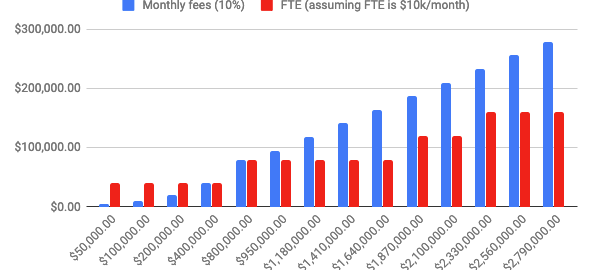
Media agency remuneration models – How to pay your media agency

I’ve encountered several media agency models in the last few years, while for a media agency side to moving to the advertiser side.

What I notice though is that there’s an absence of resources online on how media agencies can and should be remunerated. It’s often a mystery for clients that are hiring a media agency (programmatic or other) how these media agencies should be paid.

Agency renumeration is not rocket science but I wanted to share a few models I’ve encountered with their advantages and drawbacks. In this article the focus is on digital media agencies – it’s skewed by my experience with programmatic and search agencies.

Percentage of media spend remuneration

This model is quite common both for agencies and for DSPs.

The way this model works is that you pay a certain percent of your advertising spend as fees. Continue reading “Media agency remuneration models – How to pay your media agency”

In-housing vs Agencies – What’s the right programmatic approach in 2019?

I’m often asked my opinion on whether advertising should be in-housed by advertisers or if an agency should be used. This question is often asked by media or tech vendors who are interested in understanding what the future might look for them, by agency folks who are interested in understanding the POV of advertisers and by fellow advertisers, both in-housed ones and folks still working with an agency. A few days ago I saw another post about this on AdExchanger and I thought I’d chime in with my two cents.

My answer, invariably, is that it depends on your business needs at a particular point in time. It depends on the following: Your end-goal, your resources (people and tech), your scale and the type of media you’re looking to buy. I’m going to try to go into details in this article based on my experience – my disclaimer is that this is only my experience and results may vary.

Your end-goal

Often the question of in-housing vs using agencies is asked as if the choice in itself is the end goal. The truth of the matter is, for advertisers, the goal is a certain business outcome. The choice of how to buy media is just one lever towards that business outcome.

Here are examples of some wanted outcomes: More transparency into the supply chain,  being able to innovate more quickly, being able to retain some media knowledge to better your ad spend, lack of trust in the current agency models that are out there (not a good reason – but still a reason), being able to automate campaigns.

In some cases, for online pure players, the choice to bring media in-house is because of a certain asset that can be more efficiently activated in that way – 1st party data for example. It’s always more secure, if you have a significant amount of 1st party data, to share this data with as few parties as possible. To come back to the original point, if the business goal is data security, then it definitely makes sense to build at least some form of in-house advertising team.

Notice that I do not put cost saving as an end goal – to me saving money on advertising is a really poor reason to in-house a team. You’ll always get what you pay for and good programmatic talent isn’t cheap.

So point one is – know what your business goal is.

Resources (people and things)

We all have nice and lofty business goals – there’s the matter of figuring out, as objectively as possible, whether we have the resources to achieve that goal.

Here’s a few questions to help answer that:

-Is your finance team focused on cost cutting? If yes, you probably do not want to in-house. Why? Because agencies can always do with less (which is why they are struggling) but an in-house team with one person less than needed will suffer. If someone leaves and you suddenly can’t backfill, what will you do then? Ask people to do more? What if more leave?

-Can you attract the right talent? Your in-house team will be sitting in a silo, whether you like or not. They will, in most cases, be an agency within the business. To survive that you need to be offering something exciting. Do you have some piece of tech, data or a challenge that they cannot find anywhere else? Can you offer good comp?

-Can you retain the talent? Believe it or not most people do not want to activate campaigns forever. What is the next step after two years for your campaigns managers?

Scale and type of media

The biggest players in the market are Google and Facebook with Amazon catching up. Does your company have the scale to get enough support from these Behemoths on product? Maybe, maybe not.

What about if you are approaching publishers directly? Can you secure video inventory without a yearly upfront? No, I’m not talking about open market trash or outstream. I’m talking that sweet VOD inventory.

And the more important question is, going back to the point about business priorities, is why do you want to bother with this stuff? Is there a business reason for it?

A lot of media is still sold on upfront commitment. However, your goal may be pure performance. You don’t care about the placement, all you want is to optimize your campaigns to a certain business outcome.

This can also influence the way that you answer this question – if you’re not interested in upfront media and you can survive on Google Display Network inventory and Facebook Audience Network (which will be very hard to beat in terms of performance), then you may decide that there’s no need for the experience that an agency brings.

My answer 

So to answer the question at hand, I’ll conclude by saying that in-housing vs using agencies is a spectrum. You can do both and in most cases the right choice will be in the middle, with a hybrid model of in-house experts that provide continuity on long term business goals and externals that have a pure media focus, that you can scale up or down when finance picks up the hatchet.

But most importantly it has to fit your business needs and you need to be able to build it.

Also notice that a lot of the reasons behind in-housing have nothing to do with the actual purchasing of media. The media buying part is actually not that hard.

Why is last click still the most common attribution method in 2017?

Last click attribution means giving credit to the last click before a conversion/sales on your site. In today’s world, last click attribution is still the prevalent way to allocate credit (and therefore budgets) to different media touch points. It is the logic upon which a lot of performance marketing campaigns and media plans are built.

Let’s take the following scenario:

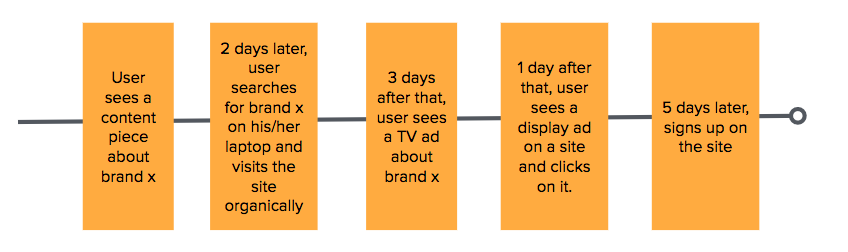
Screen Shot 2017-08-23 at 5.51.51 PM

In that scenario, under last touch attribution, the credit is given to the display ad, because this is where the last touch occurred. Continue reading “Why is last click still the most common attribution method in 2017?”

Private marketplace deals in programmatic media buying

Private marketplace deals, or PMPs for short, are inventory deals that buyers can conclude with sellers through SSPs to guarantee access for the buyers to a certain type of inventory programmatically. A few years ago, PMPs were touted as a way that could replace direct publisher sales and in many cases this has happened; for standard display banner formats, buyers often have deals set up with publishers that allows them to activate on that publisher’s inventory without having to go through the publisher’s sales people, freeing up those sales people to work on more advanced ad executions.

All the buyer and seller have to do is conclude the deal and set it up – sometimes easier said than done. The deal  can then remain available to the buyer as a doorway to that publisher’s inventory. This bring a lot of efficiency to buyers and sellers while maintaining publisher control of who is buying inventory on their properties, something that open auction buys are notoriously bad at. Continue reading “Private marketplace deals in programmatic media buying”

Prospecting and Remarketing in programmatic: How to make use of them [Part 2]

This is the sequel to part 1. Make sure you start with part 1 if you haven’t read it.

If part 1 of the series, we covered off the on the 2 basic types of targeting settings in a programmatic campaign –  prospecting and remarketing. We then covered off 4 targeting settings within prospecting.

In this part, we will cover off some more prospecting targeting settings.

Viewability targeting: 

Viewability targeting allows you to target your ads in such a way that allows them to be in view (on the screen) of the user when served. The MRC definition of viewability is 50% of the ad in view for a minimum of 1 second for display banners and 2 seconds for video (more on video later). This means that at least 50% of a display banner needs to be in-view on a user’s screen for at least a second for the impression to be considered view-able. Continue reading “Prospecting and Remarketing in programmatic: How to make use of them [Part 2]”

Prospecting and Remarketing in programmatic: How to make use of them [Part 1]

Programmatic campaigns are often divided into two main types of tactics:

  1. Prospecting: Line items that do not use 1st party data.
  2. Remarketing: Line items that use 1st party site visitor audience data

Those 2 bits combined are also known as “the funnel”. Prospecting has the broader audience with tactics that vary from geo targeting to 3rd party data, and as you go down the funnel, the audience should get smaller but more qualified and relevant. Each of those tactics aims to fulfill a goal in a programmatic campaign though. Even though the bottom part of the funnel tends to perform better, a parts of the funnel equally important. Prospecting helps you bring new customers into the funnel, prospecting helps you find relevant audiences and remarketing helps you reach users that have already engaged with your products/services.

Each part of the funnel can (and should) contain multiple line items in your DSP.

This series will cover these tactics, going down the interest funnel. Continue reading “Prospecting and Remarketing in programmatic: How to make use of them [Part 1]”

How to set up an efficient programmatic campaign

Every programmatic campaign is different. That’s because each campaign can have a different KPI and business goal. Regardless, there are some best practices that I find work for any programmatic campaign.

This post aims to address the phase from planning the campaign up to going live on a DSP. Optimization and reporting will get their own posts.

1.Set a goal, represented by a KPI if possible

Every marketing campaign should have a goal. That goal could be lead generation, branding, sales, traffic to a site, app installs…

If you do not have concrete goals and KPIs, you will not be able to tell if your campaign is performing. You will need both goals AND KPIs. A number of clicks alone is not enough – what do you need those clicks for? Similarely, improving brand awareness alone is not enough – How are you measuring brand awareness? Continue reading “How to set up an efficient programmatic campaign”

How to read custom site data from the GTM dataLayer

Google Tag Manager(GTM) has some pretty good documentation about how to implement it with Google Analytics and other Google products. However, I wanted to pass some custom site variables directly into GTM and then to feed that data into a custom HTML tag that’s sitting inside the GTM container. I figured I’d outline the solution here in simple terms for all to see.

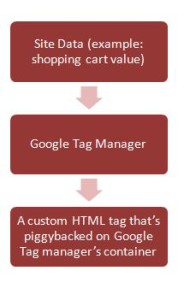
The Data Flow

Data flow
The data flow as I envisaged it.

GTM offers a simple way to pass custom site data into its container. This is done through the dataLayer object.

The dataLayer is an array that GTM asynchronously reads. Basically, it’s a table with your data as pairs of values.

For example, you want to pass your page category and the type of visitor that’s on the site in to your dataLayer. Continue reading “How to read custom site data from the GTM dataLayer”