Back in the summer of 2021, performance marketing changed irreversibly when Apple released an update its consent mechanism for sharing device ids. A lot has been written about how the impact of ATT (App Tracking Transparency) on advertising and most recently a part of the reason Meta/Facebook’s stock tanked so much was due to a loss of revenue from iOS (in addition to decline is usage).
What is ATT
In short, ATT means that advertisers need to have a user’s consent before they can target them with advertising since iOS14.5 (released sometime middle of 2021 and then ramping up in adoption since then). In the case where consent is not explicitly granted, a user’s device id, a unique identifier on mobile that powers things like suppression lists, audience targeting, the algorithms of most DSPs among other things, cannot be used.
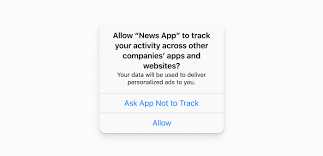
Singular has a nice piece on it here.
The impact of that change has been most spoken about so far in two ways; first its impact on Meta (mostly because Meta was so good at leveraging this unique identifier in conjunction with Meta’s own user data to power their advertising engine – this is also the reason why SNAP for example hasn’t seen the same impact – their algos were just not as good yet) and second how Apple’s own ad offering, chiefly Apple Search Ads, is now growing quickly.
What about ATT’s impact on programmatic
I’d like to focus on the impact of ATT on programmatic advertising though. Since ATT is iOS specific, this impact is felt most on mobile app advertising on iOS. I would say that in terms of efficiency mobile app advertising on programmatic has taken a much more significant hit than it has on Meta and I think the reasons this has not been covered more extensively are:
- There are not many public programmatic advertising companies that are focused on mobile app advertising and therefore the impact of this is not reported publicly as has been the case with FB. Companies like The Trade Desk (which has been the poster child of independent programmatic buying) focus on other formats and could actually benefit from worse measurement on iOS, since that means that the pool of traffic that can be optimized at a user level is smaller so advertisers will be tempted to move up the funnel to other formats like DOOH and TV to deploy their budget and this is where TTD plays.
- The mobile app focused programmatic companies that do exist have started using fingerprinting (or some variation of that term), which includes analyzing signals like IP address and device info, to get around the loss of data. Fingerprinting though is notoriously inaccurate and it’s impossible to run clear incrementality tests with it AND apple forbids it (but hasn’t enforced that policy).
- The mobile app download space has often gotten less attention in general in the broader advertising space. You don’t win awards by running a successful mobile app advertising campaign (although you can actually make money for the place you work this way instead of just spending it!). This is also the same reason we had 10 years of the mobile at some point in the 00s and start of the last decade.
The impact on programmatic iOS mobile app campaigns has been devastating. Much worse than on FB. In the case of Meta, even though they lost a very important signal, Meta still has 1st party data that it can deploy for optimization and it has enough clout to convince advertisers that the measurement solutions it is building hold water. In the programmatic space, platforms have lost the ONLY signal (the device ID) they had to do mobile attribution on iOS for ~80% of their traffic. This means that for 80% of the traffic, programmatic platforms can no longer suppress existing users, can no longer build audience lists, can no longer have a common signal to match with advertisers (there are solutions being tested but none yet has proven to be a sustainable alternative).
Companies often have user acquisition budget and user re-engagement budget, but with this situation programmatic vendors can not even build separate re-engagement and acquisition campaigns anymore. And the remaining 20% of users that opt in, well they got really expensive.
Add to this the lack of incrementality testing, which used to work by splitting users into groups using their device IDs, and the picture is bleak.
What’s next
This is where I pick up my crystal ball and potentially make a fool out of myself. I’ll answer this question in two ways – what’s next for advertisers and what’s next for programmatic.
I’ll start with what a performance focused advertiser should do and I’ll state the obvious – the users that have iphones are still out there. Their device IDs mostly disappeared but the users mostly didn’t. The other obvious thing is that the majority of high LTV users on mobile are still on iOS. Advertisers will think need to target those users and it seems the easiest way to do that now, in-spite of all the challenges those vendors have, is still the same way it was before: iOS app campaigns on Google, Meta, TikTok and Apple etc. You might be tempted to instead put all your money into android, which would be easier to measure, but that means excluding what could be your most valuable users. Even with the reduced signals on iOS, buying ads on the OS where your app is published is still the best way forward. Here are a few ways to work around the reduced data quality though:
- Combine re-engagement and acquisition budgets; you can’t do suppression well, so embrace it and find the unit economics that make sense across both acquisition and re-engagement.
- Take pre-ATT as a baseline; you might be able to use that data to understand how inventory on iOS should perform. That historical data, if you have it, is really important to make estimations now.
- If something was a bad idea a year ago, it is probably still a bad idea. IE don’t let the snake oil salespeople convince you that there’s a magical solution to bring back the data that was lost or replace it with another dataset. That dataset does not exist yet. If there was someone out there with as much data as Apple on iOS I’d like to think we would have noticed before ATT (unless the NSA are starting to monetize).
- The mental model of the funnel still makes sense, in that the channels with the easiest path to conversion are probably where you’ll have the easiest time acquiring new users (such as iOS app channel). Like I mentioned before, even though measurement is harder now iOS it’s still easier than measuring the impact of top of the funnel channels like TV. That’s not to say there’s not opportunity to test TOF – however that decision should not be driven by the iOS measurement limitations.
Next I’ll answer this question as what’s next for programmatic.
I genuinely think exchange transacted programmatic for performance marketing is going to wither away. I realize this is a big claim for someone who has programmatic in their job title (and this is a good moment to call out that all views are my own in this article and not necessarily that of my employer’s). However, Apple is giving us a preview of how things will shake out when cookies go away and when Android starts down the line that iOS has scouted. The premise of performance marketing is that you can tie back your spend to business impact and I do not see a way yet where the fragmented programmatic space (IE individual publishers selling inventory on exchanges) will be able to do this at scale. Instead the trend is clear – consolidation into quasi ad networks that get measured separately and report back their own metrics.
The advertiser will sit in the middle consolidating those different signals and finding a way to make them comparable. In a space like this, advertisers will focus where the scale is in terms of userbase and use a measurement layer on top of vendors to compare performance. It’s not as clean as looking into the MMP and knowing what’s up but those days are behind us.
Programmatic buying will continue to evolve down the path of being a great tool for buying inventory at scale (and that buying will be focused on brand campaigns) but less so a way to buy audiences at scale – that honor will go to the new ad networks.